📩 Now booking for Summer 2026 - Get in touch


From Isfahan to Paris — How a City Changes the Way You See
A personal story about leaving Iran, arriving in France, and discovering Paris through a camera lens — and how a city can change the way an artist sees the world.
PERSONAL JOURNEY · STREET PHOTOGRAPHY · BEHIND THE SCENES
Mohammad Kabirian
5/6/20263 min read
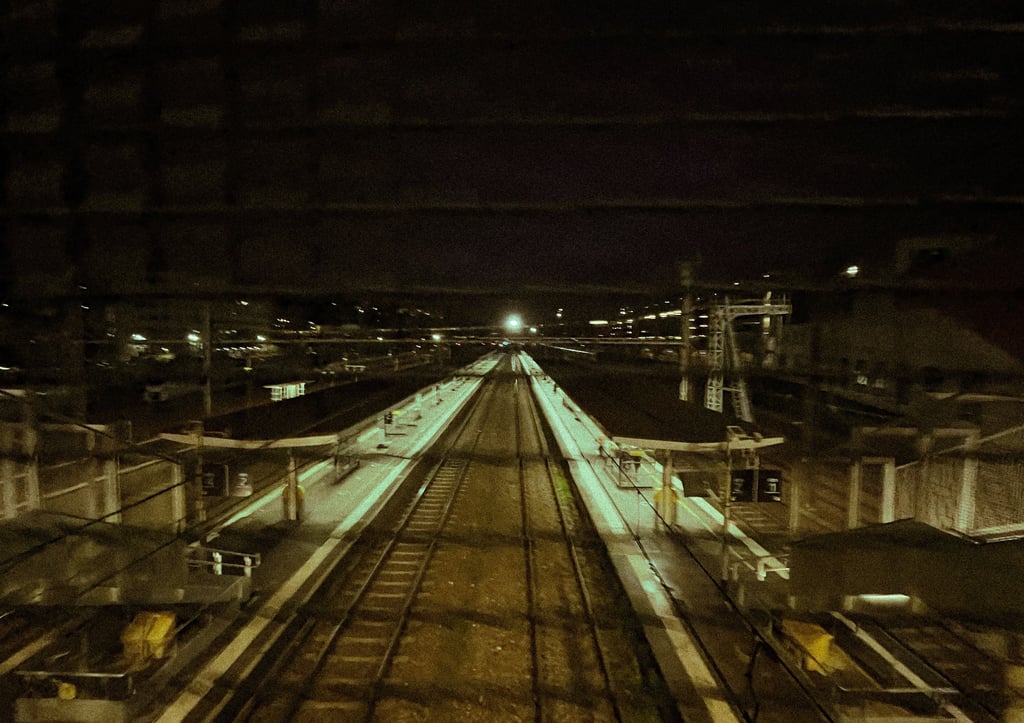
From Isfahan to Paris — How a City Changes the Way You See
I left Iran because I chose to. I wanted to continue my studies abroad, to deepen my vision, and to see the world beyond what I knew. The hardships I faced along the way made that decision more urgent — but the desire to leave, to grow, to explore: that was always mine.
During my cinema studies, I made a short film that took a year to complete. The week it was finished, my car was stolen. Then came inflation, the collapse of the dollar exchange rate, and an economic crisis that made working as an independent filmmaker feel like pushing against a wall. I was 24 years old, and every time I managed to build something small, something outside my control would take it away.
After finishing my degree, I tried to find a path forward. I was accepted into a Master's in History — but withdrew mid-semester. I attempted the military teaching programme, sat the exams and the interview. But in Iran, admission to this programme depends on a strict points system: having a parent who is a teacher or works in the Ministry of Education, being a national competition laureate, having memorised the Quran, or having a father who is a war veteran — among other criteria. I fulfilled none of them. My application was rejected. So I served in the army instead. I won't go into the details of that time.
After completing military service, the decision was clear: I needed to leave. Not out of desperation, but out of a deeper understanding that building an artistic career in Iran — as a photographer, as a filmmaker — had become structurally difficult. With the support of my family and a close friend who helped me through this transition, I found my way to France. The only place I could go.
Poitiers — not what I expected
I chose Poitiers for a simple reason: it was affordable. My budget for this transition was limited, and a smaller city made it possible.
But I came from Isfahan — a city of nearly two million people, ancient architecture, and a deep artistic heritage. Poitiers, with its quiet streets and modest scale, was a culture shock in reverse. I had imagined Europe as something grand. What I found was something quieter, slower, more intimate.
Still, Poitiers gave me something important: time to rebuild. I learned French, I adjusted, I observed. In my first year, I had the chance to photograph the set of a student film project at the university. It was a small thing — but it was the beginning of something new.
The first time I picked up my camera in Paris
My first day in France, I spent in Saint-Denis, staying with a friend. The next day, I left for Poitiers. Paris was nothing more than a transit point — a first fleeting impression, a promise not yet fulfilled.
Six months later, in April, I came back. This time for two days. And this time, I had my camera.
I remember the light. In Isfahan, sunset ends quickly — by around eight in the evening, the sky is dark. In Paris, the golden hour stretches until ten-thirty at night, sometimes later. I stood in the street watching a sky I had never seen before, and I felt something I can only describe as wonder.
Then I found myself on the Pont de Bir-Hakeim — also known as the Pont Jean-Paul Belmondo. I had known this bridge since my student years, through films. It had always existed for me as a cinematic image, not a real place. Standing on it with my camera in 2024, I felt the strange collision of two versions of Paris: the one I had lived through cinema in Iran, and the one I was now standing inside.
What Paris added to my work
I have lived Paris twice — once through cinema, from Iran, through the images of Cartier-Bresson and the films of the French New Wave. And once in reality, as a student at Université Paris 8, living in Saint-Denis.
The two experiences are not so different. Every corner of this city carries a film reference for me. Every street sends me back to something I once watched on a screen.
But Paris has also shifted something in my aesthetic. In Iran, my photography was more critical — I looked at subjects with a questioning eye, aware of the social and political weight of every frame. Here, my work has moved toward something more visual, more composed. I find myself thinking about light, about framing, about beauty. Not instead of meaning — but alongside it.
Paris is expensive. Living here as a young artist, as a student, is genuinely hard. But it is also a city that allows you to exist freely, to move through its streets with a camera, to be part of something that has been feeding artists for over a century.
I am still learning what it means to photograph this city. I am still becoming the filmmaker I want to be.
One day, I hope to shoot a scene on the Pont Jean-Paul Belmondo. Until then, I keep walking.
Explore my Paris street photography here → imkabirian.com/street-photography
Photography & Films
High-end visual storytelling for brands and individuals. Specialized in cinematic portraits, brand films, and professional videography.
Contact
© 2026 Mohammad Kabirian. All rights reserved. | Privacy Policy